Painted Like Real Life
Painted Like Real Life
words by
Bella Luna
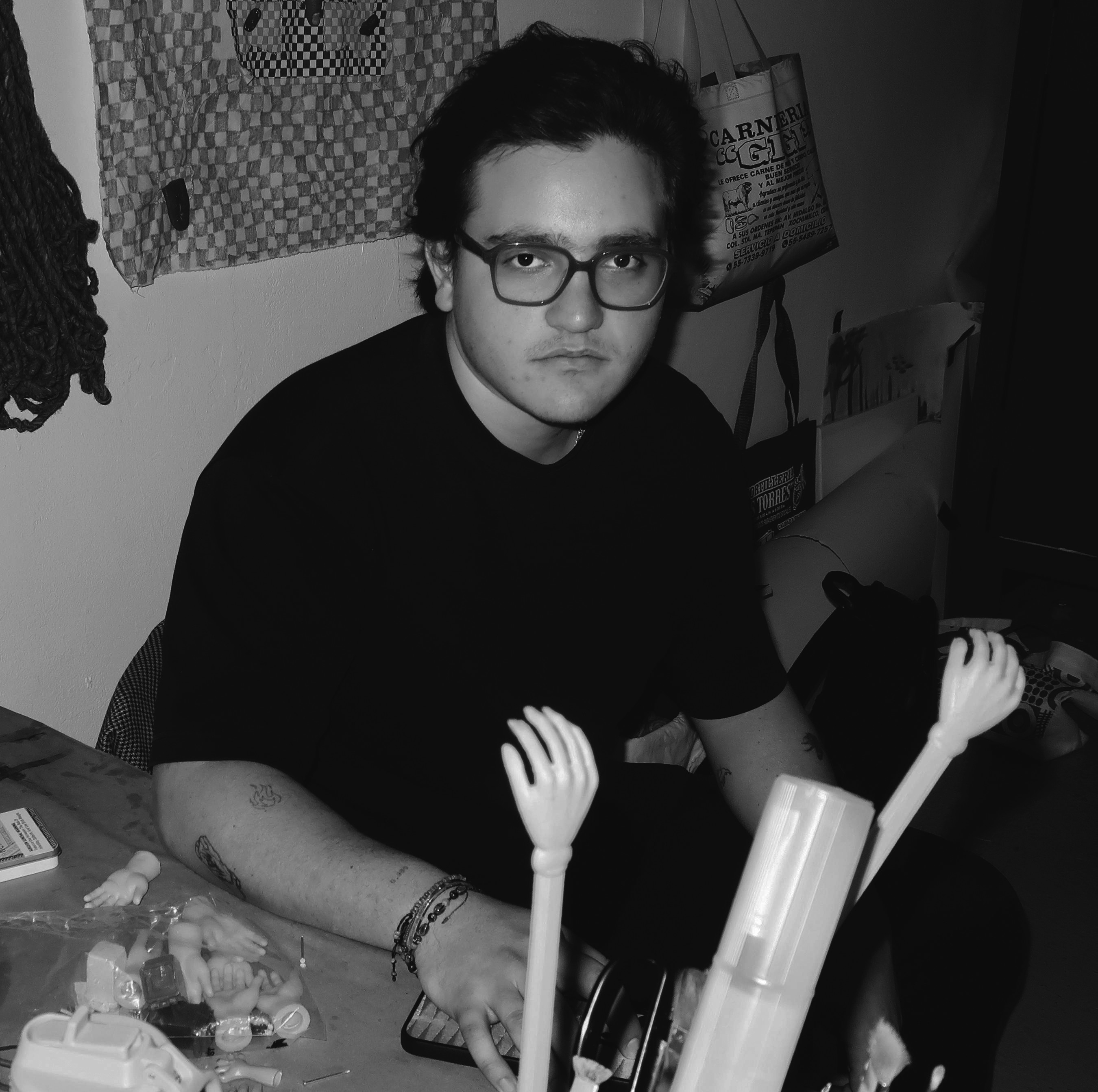
Opening February 5 in Mexico City, niño del lugar presents new works by Pedro Trueba Ramírez, a Mexican artist whose paintings and textiles render contemporary urban landscapes bridging Mexico City and Chicago, where he currently lives and works. Pedro’s work reads like everyday encounters. Anyone curious enough to walk outside of the tourist radius, will recognize the cultural iconography that fills his paintings.
Working in oil—a medium historically associated with European painting and the Western canon—Pedro applies its depth and material richness to contemporary street life. His compositions hold contradiction without resolving it: devotional Catholic altars alongside discarded beer cans; Nike logos, Labubus, and consumer debris sharing space with ritual and lived experience. These are streets shaped simultaneously by religion, capitalism, and survival.
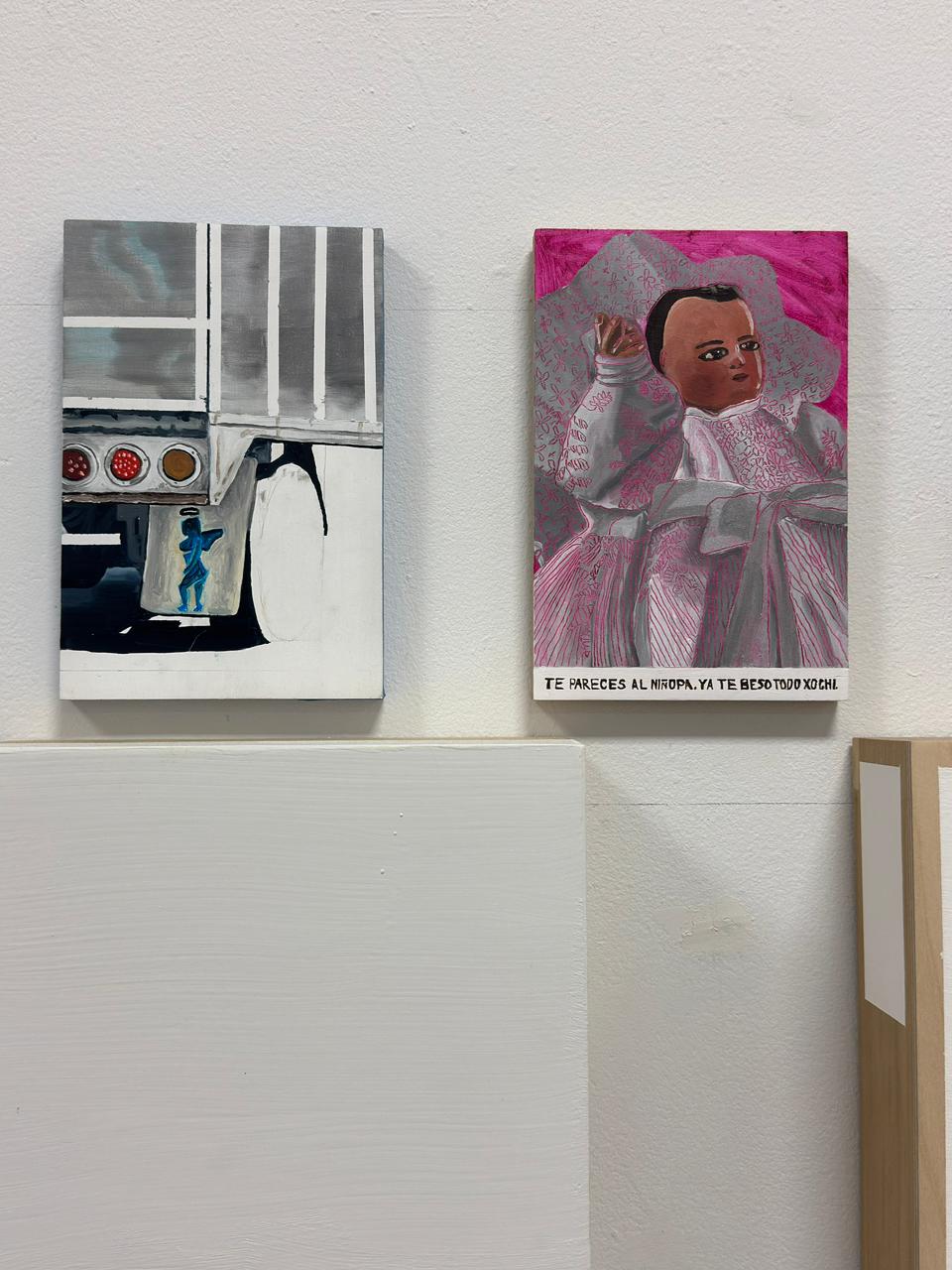
At the center of the exhibition is El Niñopan, the sacred child icon of Xochimilco, where Pedro grew up. Traditionally, families enter a lottery for the honor of hosting the figure in their home for a year. What begins as devotion also becomes public performance: how many people you invite, what food you serve, how you dress the figure, how you present your home. Hospitality becomes spectacle. Chisme and judgment are also part of the ritual. At one time Pedro’s grandmother hosted el niño and recalls “it’s like a great honor to have [El Niñopan] in your house. And you do like big parties, big meals and all of that. And it’s also a little bit about showing off your money… how many people you invite, how you present it, which clothes you dress him with, the quality of that.”
In a long-distance conversation between Chicago and Mexico City, FÁBRICA founder Darryl Richardson and AZOTEA founder Esteban Caicedo spoke with Pedro and curator Korina Victoria Hernandez about the exhibition and the conditions surrounding it—including escalating state violence and ICE presence in Chicago, diminishing opportunity for artists, and the realities drawing Pedro back to Mexico.
There is a capitalistic side to the scenes Pedro paints. Rather than separating devotion from spectacle, his work holds both. Niñopan becomes a protagonist through which faith, capitalism, community, and image collide. The paintings neither romanticize nor condemn; they observe how tradition survives and mutates inside systems of consumerism.
Pedro describes his work as intentionally childlike and comic, using humor to surface contradiction and absurdity. Bright colors and cartoon-like forms act as entry points into heavier questions: how globalization reshapes identity, how consumer brands blend seamlessly with religious symbols, and how contemporary Mexican culture is formed through both inheritance and influence.
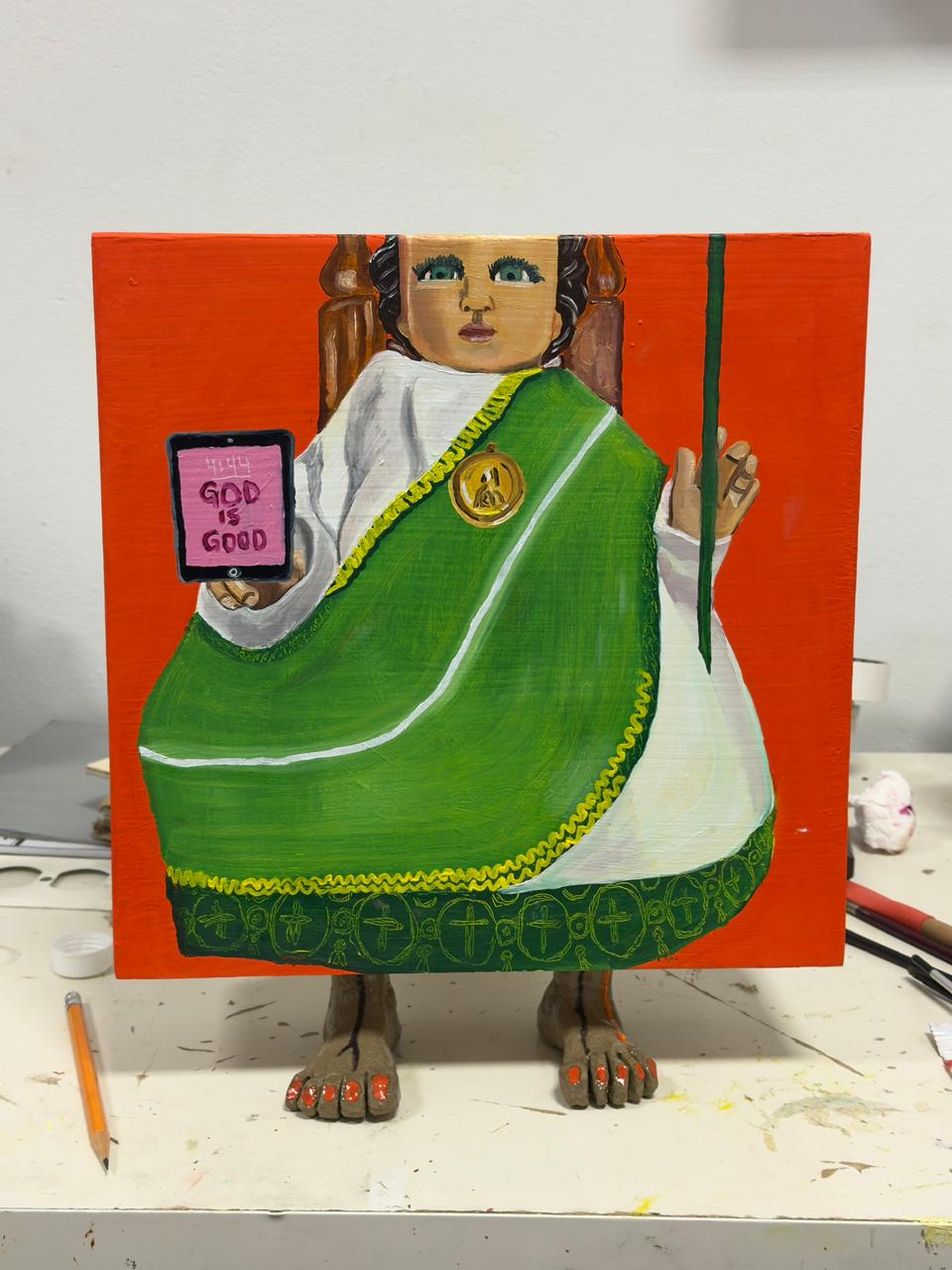
The conversation expands into a broader critique of contemporary Mexican art. Darryl points to a landscape that often leans Eurocentric—overly minimal, conceptual, and detached from lived urban experience. “Pedro’s painting real scenes… the beauty of neighborhoods that are constantly overlooked, especially in contemporary art narratives.” Pedro’s work pushes against that absence by centering everyday iconography and popular visual language, the Mexico you actually walk through.
On the journey to this show, Esteban Caicedo provoked Pedro to consider muralism and the Mexican tradition of making art through necessity rather than theory. “Muralism is non-negotiable in Mexico… the mural will scream at you and make its presence stronger than ever.” He describes Pedro’s work as an emerging language shaped by movement, condensing experiences across Mexico City, Chicago, and Johannesburg. Despite geography, these cities share objects, brands, symbols, and systems. In many ways there’s a universality to the imagery.
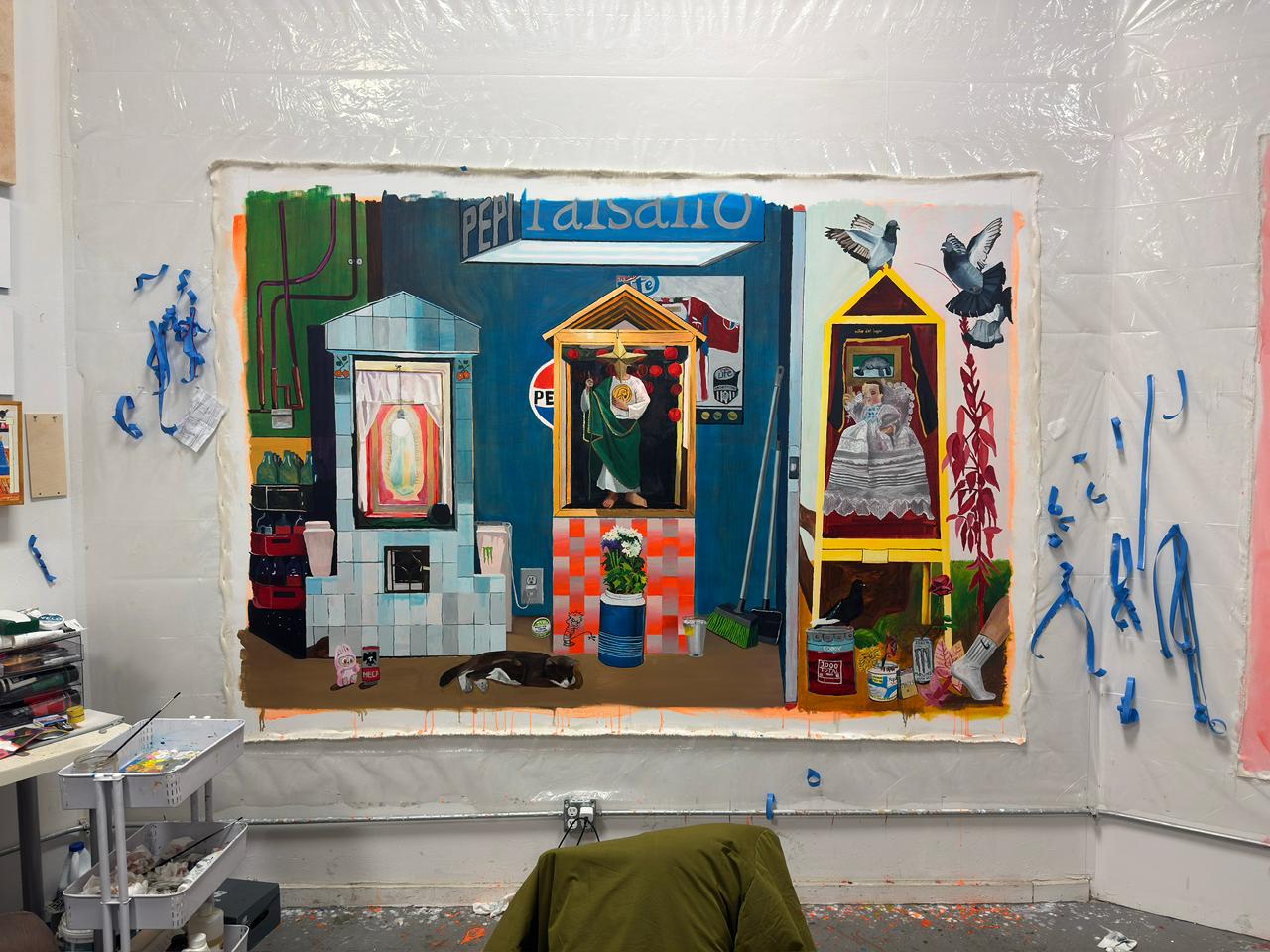
The work also engages the internet as a research space. Pedro draws from TikTok, Facebook fan pages, and online communities devoted to Niñopan and religious imagery. These references become part of the social commentary, “not as futurism, but as the present” revealing how older generations sustain tradition and build community through digital platforms.
That clarity feels urgent. As Pedro speaks about life in the United States—fear in immigrant neighborhoods, palpable rising racism, and the impossibility of sustaining an artistic life—the paintings take on sharper political weight.
Ultimately, niño del lugar positions painting as witness. Using oil—a medium historically tied to power and permanence—Pedro Trueba Ramírez paints what is often overlooked: the visual language of everyday life, where religion and brands coexist, humor carries critique, and identity is shaped by cultural collision.
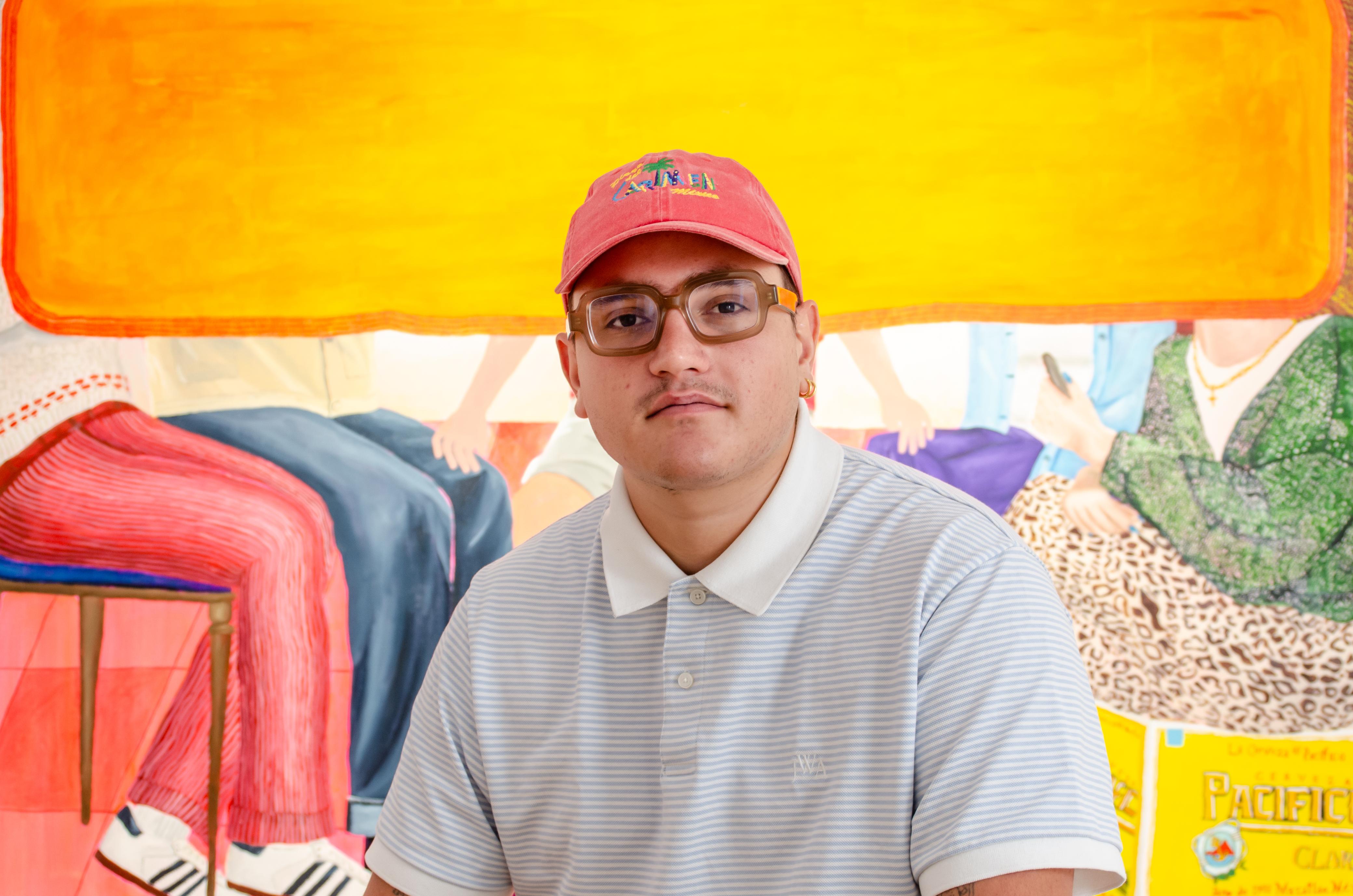
Opening February 5 in Mexico City, niño del lugar presents new works by Pedro Trueba Ramírez, a Mexican artist whose paintings and textiles render contemporary urban landscapes bridging Mexico City and Chicago, where he currently lives and works. Pedro’s work reads like everyday encounters. Anyone curious enough to walk outside of the tourist radius, will recognize the cultural iconography that fills his paintings.
Working in oil—a medium historically associated with European painting and the Western canon—Pedro applies its depth and material richness to contemporary street life. His compositions hold contradiction without resolving it: devotional Catholic altars alongside discarded beer cans; Nike logos, Labubus, and consumer debris sharing space with ritual and lived experience. These are streets shaped simultaneously by religion, capitalism, and survival.
At the center of the exhibition is El Niñopan, the sacred child icon of Xochimilco, where Pedro grew up. Traditionally, families enter a lottery for the honor of hosting the figure in their home for a year. What begins as devotion also becomes public performance: how many people you invite, what food you serve, how you dress the figure, how you present your home. Hospitality becomes spectacle. Chisme and judgment are also part of the ritual. At one time Pedro’s grandmother hosted el niño and recalls “it’s like a great honor to have [El Niñopan] in your house. And you do like big parties, big meals and all of that. And it’s also a little bit about showing off your money… how many people you invite, how you present it, which clothes you dress him with, the quality of that.”
In a long-distance conversation between Chicago and Mexico City, FÁBRICA founder Darryl Richardson and AZOTEA founder Esteban Caicedo spoke with Pedro and curator Korina Victoria Hernandez about the exhibition and the conditions surrounding it—including escalating state violence and ICE presence in Chicago, diminishing opportunity for artists, and the realities drawing Pedro back to Mexico.
There is a capitalistic side to the scenes Pedro paints. Rather than separating devotion from spectacle, his work holds both. Niñopan becomes a protagonist through which faith, capitalism, community, and image collide. The paintings neither romanticize nor condemn; they observe how tradition survives and mutates inside systems of consumerism.
Pedro describes his work as intentionally childlike and comic, using humor to surface contradiction and absurdity. Bright colors and cartoon-like forms act as entry points into heavier questions: how globalization reshapes identity, how consumer brands blend seamlessly with religious symbols, and how contemporary Mexican culture is formed through both inheritance and influence.
The conversation expands into a broader critique of contemporary Mexican art. Darryl points to a landscape that often leans Eurocentric—overly minimal, conceptual, and detached from lived urban experience. “Pedro’s painting real scenes… the beauty of neighborhoods that are constantly overlooked, especially in contemporary art narratives.” Pedro’s work pushes against that absence by centering everyday iconography and popular visual language, the Mexico you actually walk through.
On the journey to this show, Esteban Caicedo provoked Pedro to consider muralism and the Mexican tradition of making art through necessity rather than theory. “Muralism is non-negotiable in Mexico… the mural will scream at you and make its presence stronger than ever.” He describes Pedro’s work as an emerging language shaped by movement, condensing experiences across Mexico City, Chicago, and Johannesburg. Despite geography, these cities share objects, brands, symbols, and systems. In many ways there’s a universality to the imagery.
The work also engages the internet as a research space. Pedro draws from TikTok, Facebook fan pages, and online communities devoted to Niñopan and religious imagery. These references become part of the social commentary, “not as futurism, but as the present” revealing how older generations sustain tradition and build community through digital platforms.
That clarity feels urgent. As Pedro speaks about life in the United States—fear in immigrant neighborhoods, palpable rising racism, and the impossibility of sustaining an artistic life—the paintings take on sharper political weight.
Ultimately, niño del lugar positions painting as witness. Using oil—a medium historically tied to power and permanence—Pedro Trueba Ramírez paints what is often overlooked: the visual language of everyday life, where religion and brands coexist, humor carries critique, and identity is shaped by cultural collision.


